


 In his latest recording, Reinoud Van Mechelen explores the diversity of Clérambault’s musical language, moving between the brilliance of the Te Deum and the inwardness of the Histoire de la femme adultère.
  By
By 


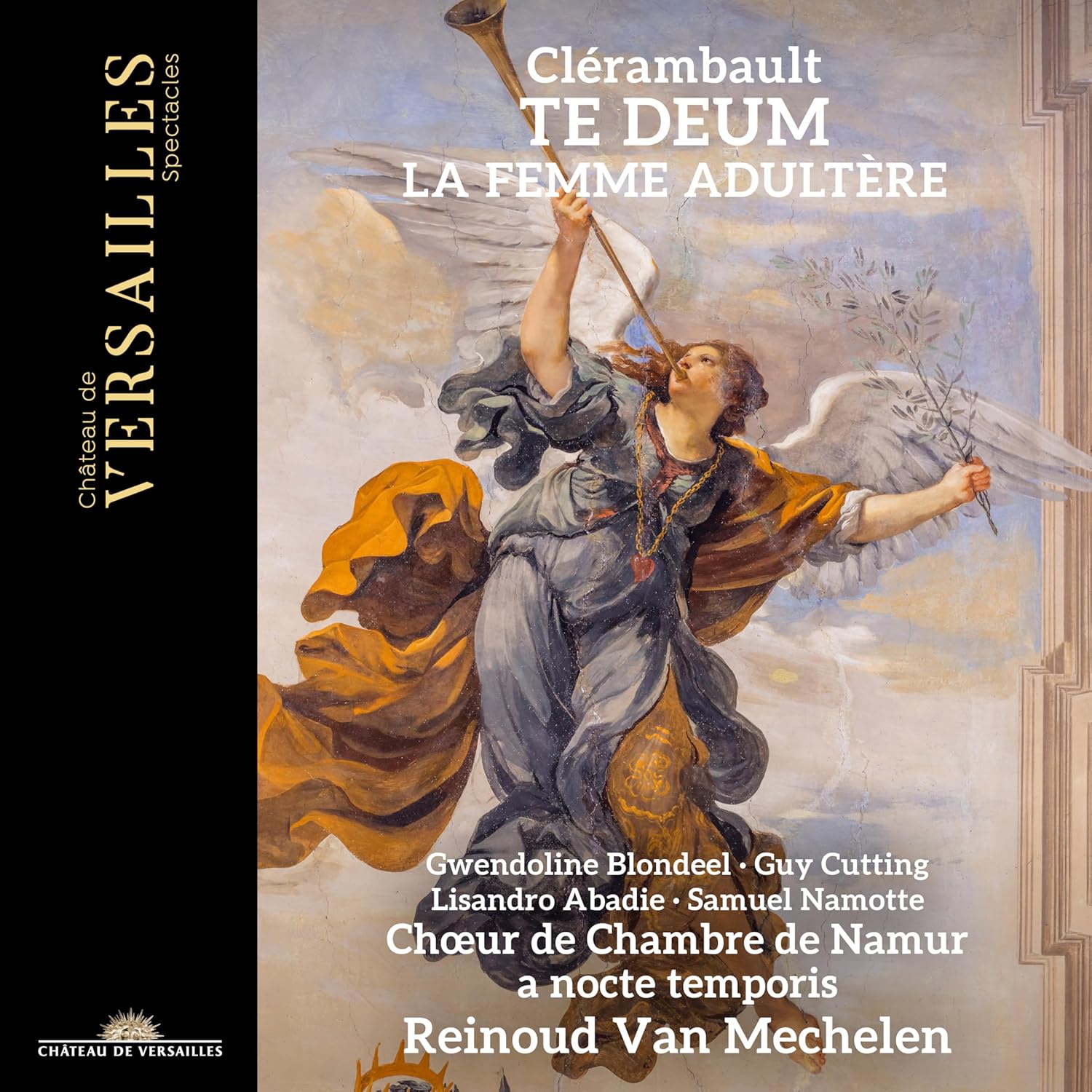
In his new recording Clérambault: Te Deum / La femme adultère, the Belgian tenor and conductor sets side by side two rarely heard sacred works that reveal the richness of Louis-Nicolas Clérambault’s writing. A key figure of the French Grand Siècle, Clérambault (1676–1749) was an organist, harpsichordist and maître de la chapelle royale, celebrated in his day for his cantatas and motets. An heir to Lully and well acquainted with Couperin, he combined the elegance of the French tradition with the expressive intensity of the Italian style. Here, a radiant and festive Te Deum, a celebration of divine praise; there, an intimate, contemplative oratorio on the parable of the adulterous woman. By pairing these contrasting works, Van Mechelen casts fresh light on a composer at the crossroads of harmonic traditions.
In this pairing of the Te Deum and the Histoire de la femme adultère, we move from a spectacular style of writing to an almost chamber-like oratorio. Why did you choose this shift in aesthetic and mood?
Reinoud Van Mechelen: They are both sacred works, but indeed they are very different. The premiere of the Te Deum in the eighteenth century raises many questions, as no autograph manuscript by Clérambault has survived. The only existing source contains a great many errors, but the Centre de Musique Baroque de Versailles [Versailles baroque music Center] has done remarkable work to make the piece performable today. I chose to interpret the Te Deum without reconstructing the alto parts, in order to create a link with the instrumentation of the two works and because I believe it was written for a smaller ensemble than that of the Chapelle Royale. The most striking difference lies in the subject matter: the Te Deum is a joyful hymn of praise, whereas the Histoire de la femme adultère is more introspective and invites reflection. I love the fact that the contrasts between these two works are so strong, both in form and in substance.
Clérambault is recorded less often than Charpentier or Lalande. What do you particularly value in his way of writing?
R. V. M.: I find Clérambault’s musical language to be extremely rich harmonically, and it highlights the emotions in the text with great clarity. For me, he is a key composer, bridging the world of Lully and Charpentier with that of Rameau. You find the same qualities in his cantatas — which we recorded for Alpha Classics in 2018 — but also in his sacred music.
If one were to listen to just a single moment from this recording to discover the world of the composer as you have imagined it, which would you choose — and why?
R. V. M.: I would listen to the Te ergo quaesumus from the Te Deum. It is a moment of pure grace, where Clérambault paints the prayer of humankind asking God for help with remarkable sensitivity. There is a great harmonic richness here, in both choir and orchestra, which makes it deeply moving and highlights Clérambault’s genius in a particularly striking way!
 Press review
This disc is an impressive testimony of Clérambault’s qualities in the field of sacred music, and that is also due to the quality of the performances. […] The soloists are excellent […] The instrumental parts are perfectly executed. This disc deserves an unequivocal recommendation.
Johan van Veen, MusicWeb
Anyone yet to discover Clérambault is urged to hear this exceptional recording!
Brian Robins, Early Music Review
These exquisite performances shed important new light on Clérambault’s sacred and devotional output.
David Vickers, Gramophone
True to his style, Reinoud Van Mechelen directs with the same suppleness and natural ease with which he sings the role of Christ, with finesse, close attention to prosody and to the richness of the counterpoint […] The ensemble A Nocte Temporis, supported by an excellent continuo, leads the performance with efficiency and a refined sonority.
Alain Huc de Vaubert, ResMusica
An unrivalled recording, highly recommended for the rediscovery of major works.
Viet-Linh Nguyen, Muse Baroque

You must be logged in to be able to post comments.
Sign in