


 “More is more.” For Anna Danilevskaia, Flamboyant Gothic finds an unexpected echo in the music of the fourteenth and fifteenth centuries: the same finely chiselled lines, the same profusion of ornament, the same sense of vertigo before a structure almost concealed by detail. With Sollazzo, she brings together twenty musicians to evoke this teeming world, from Landini and Binchois to Du Fay.
 By
 4 minutes


Released in May 2026 by Passacaille as part of the Alamire Foundation Editions series, Flamboyance – The Sound of Change: Music of the Flamboyant Era brings together Sollazzo in an exceptionally expanded line-up of twenty singers and instrumentalists under the direction of Anna Danilevskaia. Recorded at AMUZ in Antwerp, the album spans more than a century of music, from the Italian Trecento to the beginnings of the Burgundian era. Initiated by the Alamire Foundation as part of the celebrations marking the 600th anniversary of KU Leuven, it brings sacred and secular repertoires, courtly and chapel music into dialogue.
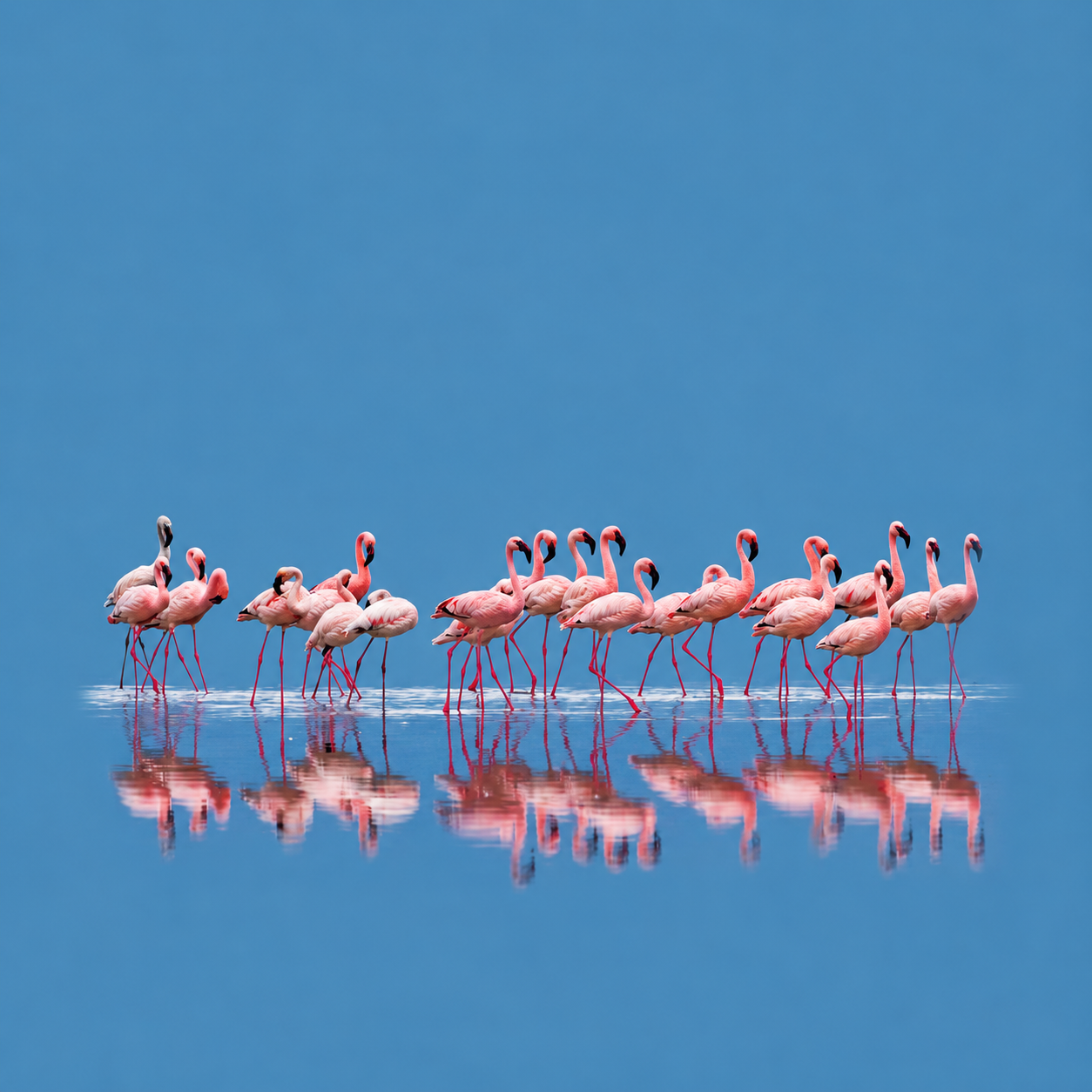
The title does not, strictly speaking, refer to a musical movement. Its imagery is borrowed from Flamboyant Gothic, the late phase of Gothic architecture in which ornament proliferates to the point of sometimes seeming to take precedence over structure. Anna Danilevskaia sees a parallel with music whose lines are laden with detail, diminutions and ornament, while resting on particularly elaborate polyphonic constructions.
The programme also reflects the intense exchange of musicians and styles across fourteenth- and fifteenth-century Europe. Alongside Ciconia, Du Fay, Binchois, Landini, and Matteo da Perugia are several anonymous works transmitted in the Turin Codex, the Vatican manuscript Urbinates latini 1419, the Robertsbridge Codex and a manuscript from Messina. Sollazzo seeks not only to reconstruct the notes from these scattered sources, but also to rediscover the possibilities for interpretation, ornamentation, and transformation.

The album is entitled Flamboyance, which is quite a statement: the word suggests a very particular, compelling energy and palette of colours. What does it evoke for you musically?
Anna Danilevskaia: Flamboyance refers to an architectural style, one of the great chapters of Gothic art, which moves me deeply: the ornaments are numerous and exuberant, to such an extent that they make the structure less perceptible, more blurred, sometimes almost incomprehensible. When the eye allows itself to be led from one ornament to another, captivated by the details, a sense of slowing down and weightlessness emerges: the mind becomes absorbed in the minutiae and forgets to analyse the structure. And at a certain point you wonder: how does this building stay standing? Yet the structure is very much there, essential. A similar effect occurs with the repertoire chosen for this project: the lines are finely chiselled, full of detail, ornamented first by the composers themselves and then further by our musicians. I delight in this profusion, both in architecture and in music. More is more!
The programme brings together composers from Italy, France and the Low Countries, from Landini to Du Fay. What did you want to convey through this musical journey?
A. D.: Encounters — those of the past and those of today. Hundreds of years ago, there were already things akin to conferences, gatherings of musicians from all corners of Europe. Sometimes they were linked to a political event: one court would visit another and travel with its musicians. At other times, musicians simply gathered to exchange ideas, as, for example, fiddle players did in the city of Deventer.
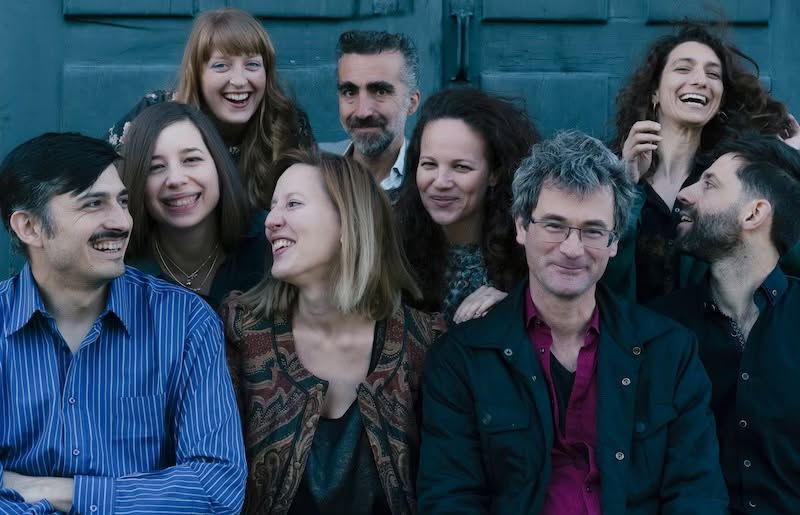
Each musical centre developed its own language, enriched by local nuances, and these exchanges of knowledge and ideas brought fresh air into musical life and enriched it. This was not really on my mind when I was preparing Flamboyance, but once our large team was assembled, I realised that I had unconsciously reproduced the same pattern: in this wonderful group we have musicians who studied in Barcelona, Geneva, Tours, Lyon, or Basel. Each arrived with ideas, habits and ways of doing things inherited from a particular tradition. Things that had seemed obvious, such as the way to end a phrase, for example, were no longer obvious at all, because there were so many possible options. It was extremely interesting and inspiring to allow these different traditions to intermingle during a residency of no fewer than ten days at the Alamire Foundation.
Some of the pieces on the album are very old, sometimes preserved in only a single source. Between research, reconstruction, decisions about arrangements and collective work with the musicians, how did you bring them back to life?
A. D.: Some pieces in this programme have accompanied the ensemble for years, some since its very beginnings, such as Du Fay’s motet O Sancte Sebastiane. Over time, they acquire a certain patina; they mature from one concert to the next. Some make sense in several programmes, built around different themes, and depending on the angle from which we approach them and their position within a concert, they take on different colours and reveal one aspect or another. These works seem to have a life of their own, and I sometimes feel that they choose us rather than the other way round.
If you had to choose just one, which would be your favourite piece on the album?
A. D.: Amours merci, a song by Binchois performed by Jonatan Alvarado. The arrangement I devised here is inspired by the Bayeux Manuscript, where pieces by major composers appear stripped of their original accompaniment and placed within a context of improvisation. They thus become pieces of a completely different kind, governed by a different logic and imbued with freedom. Jonatan is one of the great voices in our repertoire, and his talent is not only vocal: he fully embraces the role of interpreter as I understand it, with total commitment and an artistic investment as important as that of the composer.

Upcoming
- November 28, 2026 – “The Leuven Chansonnier”, Berliner Festival Alter Musik, Villa Elisabeth, Berlin (Germany)
- March 5, 2027 – “La dolce vista”, Cambridge Early Music, St Catharine’s College Chapel, Cambridge (United Kingdom)
- May 25–30, 2027 – “Herders aan het Spaanse hof”, with Música Temprana — Anna Danilevskaia, vihuela de arco; tour to Amsterdam, Zwolle, Maastricht, Almere, Zeist and Garmerwolde (Netherlands)



You must be logged in to be able to post comments.
Sign in