


 From Honduras to Europe’s leading stages, Dennis Orellana found his voice almost by chance, somewhere between trombone, choir, and symphonic metal. Fascinated by Bach and Handel and revealed by a visionary teacher, he recounts his meteoric journey—from his beginnings in Madrid to his discovery of Europe—and that overwhelming sensation of finally feeling “at home” on stage.
  By
By 


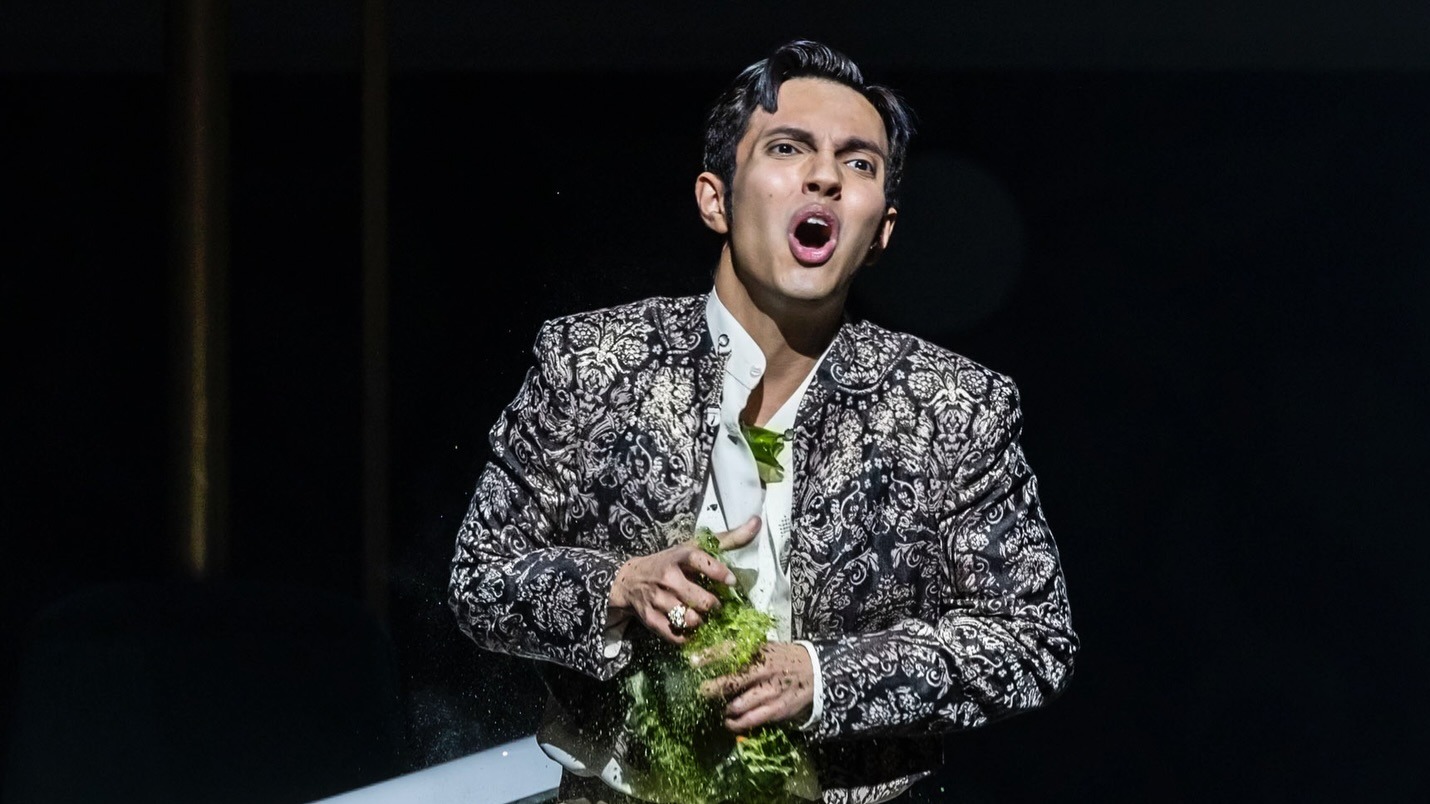
Born in 2001 in San Pedro Sula, Honduras, sopranist Dennis Orellana has followed a singular path, from trombone to singing. After studying at the Escuela Superior de Canto in Madrid and then at the Stuttgart University of Music and Performing Arts, he was spotted early on and made his operatic debut in Madrid in 2021 in Carlo il Calvo by Porpora. He reprised the role in 2022 at La Scala in Milan, drawing the attention of the baroque world. In 2024, he won First Prize at the inaugural Farinelli Countertenor Competition, organized by the Internationale Händel-Festspiele in Karlsruhe. A portrait of a 24-year-old singer with an impeccable trajectory, driven by a voice of rare flexibility, with effortless (strato)spheric highs and an innate sense of baroque style.
How it all began
My family is not musical at all. We love music, but I always felt this need to make it myself. As a child, I was very passionate about singing. I loved pop music, Disney songs—everything that was on the radio—and that’s how it all started. Around the age of 14 or 15, I decided to begin formal musical training in my city.
I auditioned for the music school, but you couldn’t really choose your instrument. I was a bit older than the other children, so they told me, “All right, you’re a teenager, you can carry a trombone.” I continued with that instrument. We also had a choir class, and that’s how I started singing. The trombone had an impact on my voice, because many breathing techniques are very similar. It also helped me improve pitch accuracy, since I had to be extremely precise with the slide position to get the exact note. All of this was enormously helpful for singing and for learning scores, especially in contemporary music.
From symphonic metal to baroque
I started singing soprano because, just before entering music school, I became obsessed with a subgenre of rock and metal: symphonic metal. It’s a blend of orchestra, choir, and classical singers. Many of these bands featured female vocalists, and I was fascinated by their sound. I already knew about opera, but I had never really immersed myself in it—until these rock singers opened the door. I was obsessed with vocal colour, with the use of head voice, with the way resonance blended with the group, with the strings, and then with the guitar.
I became passionate about baroque music the moment I heard Buxtehude and Bach. I thought, “This is my world.” This music carries me away. It is so well written, so intelligently conceived for pleasure and emotion. I wondered whether my head voice could reach those notes, and I started trying out arias.

Passionate about early music and want to read this subscriber-only article?
If you are not a subscriber, join the international Total Baroque community. Subscribe here from 5.00€.
I subscribe
If you are already a subscriber, sign in.
I sign in 

You must be logged in to be able to post comments.
Sign in